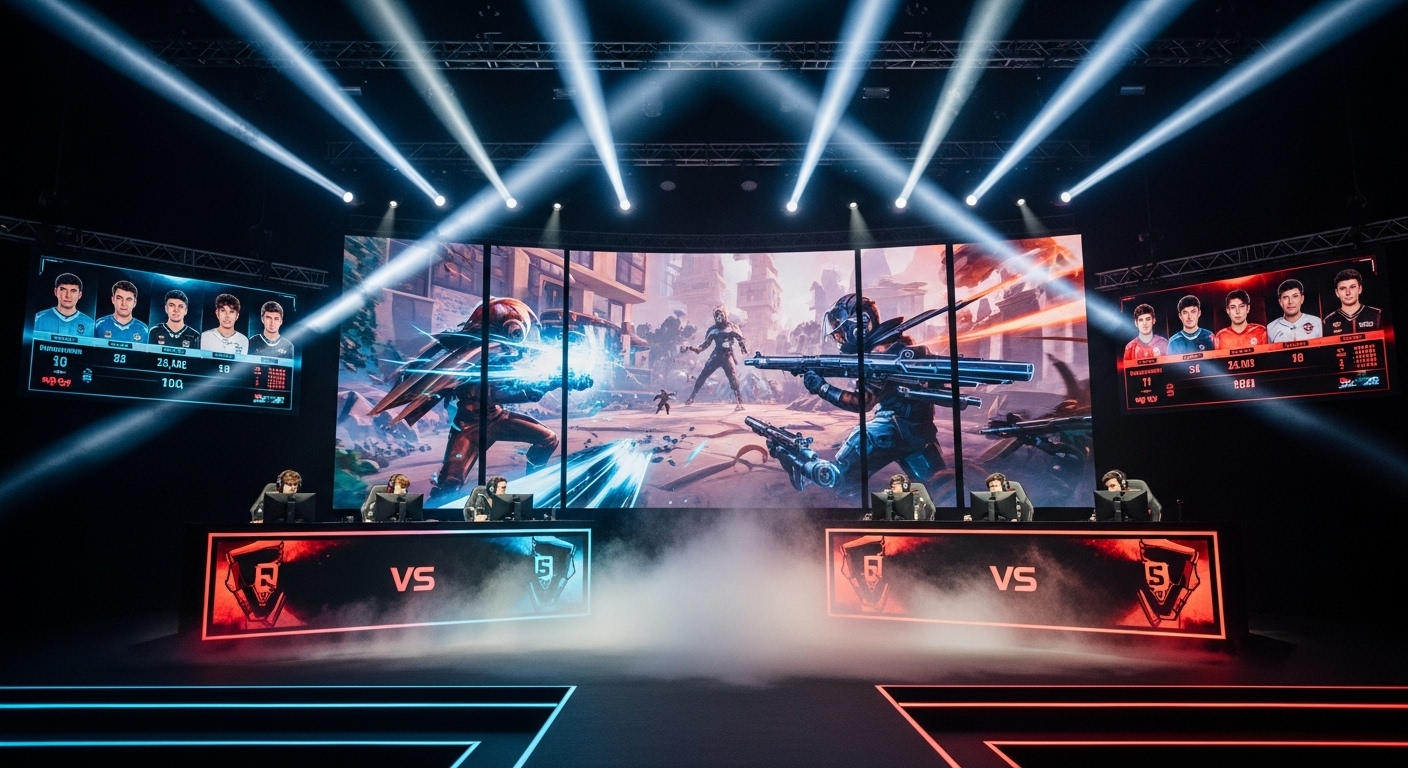
Esports, short for “electronic sports,” has evolved from a niche subculture into one of the most influential industries in entertainment. What began as small gatherings of gamers competing for fun has grown into massive tournaments that fill stadiums, attract millions of online viewers, and offer prize pools that rival traditional sports.
In this post, we’ll explore how Esports became a global phenomenon, the culture and technology behind it, the people driving it forward, and what the future might look like for this fast-moving industry.
From Basement Battles to Global Arenas
The story of Esports is one of rapid transformation. In the early 1980s, competitive gaming existed in small corners of arcades, where players would try to top high-score charts in games like Pac-Man and Space Invaders. Local newspapers might cover these competitions, but that was about the extent of their fame.
As computers and home consoles became more accessible in the 1990s, the idea of competitive gaming started to gain traction. Games like Street Fighter II and StarCraft inspired local and international tournaments. South Korea, in particular, played a massive role in establishing Esports as a professional pursuit. The government-supported broadband infrastructure made online gaming widely available, and soon, professional StarCraft players were national celebrities.
By the 2000s, organized leagues like Major League Gaming (MLG) in the United States began shaping Esports into something more formalized. They introduced sponsorships, official broadcasting, and structured competitions. What was once a hobby had started to look like a real sport.
The Power of Technology
The technological evolution of the last two decades has been the fuel behind Esports’ meteoric rise. Broadband internet allowed players to compete globally without the limitations of geography. Streaming platforms made it easy for anyone to watch live matches. Gaming hardware became faster, sharper, and more affordable, enabling both professionals and fans to experience games at the highest level.
The arrival of platforms like Twitch, YouTube Gaming, and Facebook Gaming created a new ecosystem. Players could build careers not only through tournaments but also by streaming their practice sessions, building fan communities, and earning from ads and donations. This digital accessibility democratized the entire Esports experience — suddenly, anyone with talent, discipline, and a good connection could dream of going pro.
Esports also benefited from social media. Players gained personal followings, teams built brand identities, and fans interacted directly with their favorite competitors. In short, Esports became more than gaming — it became a lifestyle.
The Games That Built the Empire
Every great movement has its icons, and Esports is no different. Certain games became the pillars upon which this entire industry stands.
1. StarCraft: The Pioneer
Few games have had a cultural impact as profound as StarCraft. In South Korea, it turned gaming into a national pastime. Televised matches drew millions of viewers. Players like BoxeR and Flash became household names. The strategic depth of StarCraft proved that gaming could demand the same mental agility and preparation as chess or poker.
2. Counter-Strike: The Shooter That Defined a Genre
From its humble beginnings as a Half-Life mod, Counter-Strike grew into a global Esports staple. The combination of teamwork, reflexes, and tactical precision kept audiences glued to their screens. Even two decades later, titles like CS:GO and Counter-Strike 2 continue to headline major tournaments.
3. League of Legends: The Global Phenomenon
Riot Games’ League of Legends is perhaps the most important Esports title of the last decade. With its annual World Championship filling stadiums and being watched by millions online, it has achieved a scale that rivals the Super Bowl. Riot’s commitment to consistent updates, storytelling, and fan engagement has made LoL the gold standard for organized Esports.
4. Dota 2: The Million-Dollar Arena
If League of Legends brought structure, Dota 2 brought spectacle. Its tournament, The International, boasts some of the largest prize pools in gaming history — often exceeding tens of millions of dollars. The event is funded in part by fans, who purchase in-game content that contributes directly to the prize money.
5. Fortnite and the Modern Esports Era
When Fortnite entered the scene, it did more than redefine gaming — it reshaped pop culture. Epic Games’ ability to merge battle royale gameplay with music events, brand collaborations, and storytelling made it accessible to a broader audience. The 2019 Fortnite World Cup turned a teenager, Kyle “Bugha” Giersdorf, into a millionaire overnight and cemented the idea that Esports could be a mainstream career.
The Athletes Behind the Screens
It’s easy to underestimate Esports players if you’ve never watched them compete. But at the top level, these athletes undergo intense training regimens that mirror traditional sports.
Professional players often practice eight to twelve hours a day, studying strategies, improving reflexes, and building team coordination. Mental resilience, communication, and precision under pressure are crucial. Just as basketball players analyze plays, Esports pros review gameplay footage to find weaknesses and refine their tactics.
Organizations now employ coaches, nutritionists, and psychologists to ensure players maintain both physical and mental health. Burnout is a real issue in the Esports world — reaction times decline with age, and the competitive scene moves fast. A player’s prime often ends before their late twenties, making the career both exhilarating and unforgiving.
Esports as a Spectator Sport
One of the biggest misconceptions about Esports used to be that “no one wants to watch other people play games.” Time has proven that statement completely false. Millions now tune in to live tournaments every month, and the numbers are still growing.
Modern Esports broadcasts resemble traditional sports coverage — complete with commentators, instant replays, and detailed analytics. The production quality is top-notch. Events are hosted in packed arenas, from the Staples Center in Los Angeles to the Bird’s Nest in Beijing. Fans wave team banners, wear jerseys, and chant like supporters at a football match.
Esports has also managed to turn digital viewership into a massive advantage. Unlike traditional sports that rely heavily on TV deals, Esports thrives on streaming. Viewers can engage in real time, chat with other fans, and even donate directly to players. It’s interactive, immediate, and tailor-made for the digital age.
The Economics of Esports
Behind the flashing lights and booming crowds lies a serious business ecosystem. The Esports industry generates billions in revenue from sponsorships, media rights, merchandise, and advertising. Major brands — from tech companies to food and apparel giants — see Esports as a gateway to younger audiences.
Franchise-based leagues, such as the Overwatch League and Call of Duty League, have followed models similar to the NFL or NBA. Teams buy in for millions of dollars and operate within a structured system that ensures consistent competition and branding opportunities.
Prize pools are another key attraction. While top players earn substantial winnings, much of the money in Esports comes from salaries, sponsorship deals, and streaming. A player’s ability to entertain and build an audience can sometimes matter as much as their in-game skills.
Colleges and Esports: A New Pathway
The integration of Esports into education has been one of the most interesting developments of recent years. Universities now offer scholarships for Esports athletes, treating them like traditional sports recruits. Entire degree programs focus on game design, broadcasting, and event management.
These academic pathways legitimize gaming as both a career and a field of study. Students can now see Esports not just as something to play, but as an industry to build — one with opportunities in production, marketing, coaching, and beyond.
Cultural Impact and Global Reach
Esports is more than competition; it’s a cultural movement. It unites people across borders, languages, and lifestyles. For many young fans, it’s their first exposure to global teamwork and community.
Events like the League of Legends World Championship or The International have become cultural festivals, complete with music performances, opening ceremonies, and international fan gatherings. Cosplay, fan art, and streaming personalities contribute to the vibrancy of this ecosystem.
Countries like China, South Korea, and the United States dominate the competitive landscape, but new regions — such as Southeast Asia, the Middle East, and Latin America — are quickly catching up. Government initiatives in places like Singapore and the UAE are investing heavily in Esports infrastructure and youth training.
The Role of Women in Esports
For a long time, Esports was seen as a male-dominated space. But that perception is changing fast. More women are entering the scene as players, casters, coaches, and organizers. Female-led teams are forming across major games, and visibility is improving.
However, challenges remain. Gender bias and online harassment are still major issues in gaming culture. Organizations and communities are now taking active steps to foster inclusivity, launching initiatives and tournaments specifically designed to support women in competitive gaming.
Representation matters — and as more women gain recognition in Esports, the community becomes richer, more diverse, and more reflective of its global fanbase.
Challenges and Growing Pains
Like any fast-growing industry, Esports faces its share of obstacles. Player burnout, uneven pay, and lack of long-term stability are common issues. Some leagues struggle with sustainability, and smaller organizations often rely heavily on sponsorships that can disappear quickly.
Cheating and match-fixing scandals occasionally make headlines, reminding everyone that integrity must be protected. Regulation is still catching up with growth — there’s no global governing body for Esports yet, which makes consistency difficult across regions and games.
Despite these issues, the industry continues to mature. Investors, developers, and communities are learning from each misstep, refining contracts, and introducing player protections to ensure a fairer and more sustainable future.
Esports and Traditional Sports: Rivals or Partners?
Rather than replacing traditional sports, Esports seems to be complementing them. Many sports organizations have embraced gaming as a way to reach younger audiences. Football clubs like Manchester City, Paris Saint-Germain, and Real Madrid have their own Esports divisions. The NBA has the NBA 2K League, where teams compete virtually under real-world franchises.
The lines are blurring even further. Sports simulation titles like FIFA, NBA 2K, and Formula 1 Esports bridge the gap between the physical and digital worlds. Meanwhile, traditional athletes are investing in Esports organizations or even competing in them during off-seasons.
Esports also offers something that physical sports can’t — accessibility. Anyone, regardless of physical ability or location, can compete if they have the skill. That inclusivity gives it a universal appeal.
The Future of Esports
If the last decade has been about growth, the next will be about refinement. Esports will continue to expand into new regions and platforms, but the real challenge will be building infrastructure that ensures longevity.
Expect to see more integration with virtual and augmented reality, making competition more immersive. Cloud gaming could eliminate hardware barriers, allowing even more people to participate. Education and training academies will formalize player development, much like traditional sports academies do today.
The metaverse concept — persistent digital spaces where players and fans interact — may further redefine how Esports is experienced. Fans might one day “attend” a match virtually, walking through digital arenas and interacting with others in real time.
But the most important shift will likely be cultural. As gaming becomes more normalized and respected, Esports will be seen not as an alternative to traditional sports, but as its digital counterpart — equally demanding, entertaining, and inspiring.
Conclusion: The Game That Never Ends
Esports has come a long way from the days of dimly lit arcades and basement LAN parties. It’s now a global industry that touches technology, culture, and community. What makes it so powerful isn’t just the competition — it’s the shared excitement, the stories of underdogs rising, the fans cheering from around the world, and the realization that digital spaces can create real emotion.
The growth of Esports represents more than a change in how we play; it marks a transformation in how we connect. As long as there are games to play and people who love playing them, Esports will keep evolving — endlessly pushing the boundaries of what entertainment can be.